Als digitale Nutzer*innen, Aktivist*innen, Autor*innen und Redakteur*innen sind wir uns eines großen Widerspruchs klar bewusst: Auch wenn wir von der digitalen Technologie profitieren, besteht unsere Grundhaltung darin, wachsam und kritisch gegenüber diesen scheinbar harmlosen Werkzeugen zu bleiben.// As digital users, activists, authors, artists, editors, we are well aware of the contradiction at hand. Thus, as long as we profit from using digital technologies, it is our compromise to remain vigilant toward these seemingly harmless tools.
On 26th September 2025 the webinar “Imagining Spaces for the decolonization of Technology” was held as part of series of events for the project from migrazine and Verein maiz, focusing on counter-narratives and alternative practices of resisting within the digital space.
On 26th September 2025 the webinar “Imagining Spaces for the decolonization of Technology” was held as part of series of events for the project from migrazine and Verein maiz, focusing on counter-narratives and alternative practices of resisting within the digital space.
Can we reclaim these settlers’ infrastructures? Can we make them belong to the people again? We might. And hopefully, eventually, we will! That’s what activist organizing is all about - creating change and transformation, making restitution and justice possible and attainable. But this is just one of the many paths movements can walk.
Infrastructures connect us through layers of protocols, programs, many factories of servers and cable, satellites and so on. The materiality of the internet is devouring land, water, humans.
Beyond your browser page on your flat screen phone, the internet looks different. It is not invisible. It is made up of matter like everything else. It might help if you follow the cable that connects your modem to the street, to the towers, before it vanishes underground into a sea of cables that connect the world.
This essay serves to reflect on the politics of acknowledging technological infrastructures in what I am calling “Infrastructure Acknowledgements” which seek to learn alongside, pay attention to and care for the concept and practice of Land Acknowledgements.
Every time we open a new Google Docs, we’re furthering multiple ongoing genocides: is this an overstatement?
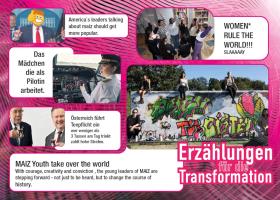
Im Rahmen des Projekts „Erzählungen für die Transformation“, haben wir im Verein maiz eine dreiteilige Workshopreihe gestaltet, um mit jungen Menschen über Erzählungen, Narrative und (digitale) Medien ins Gespräch zu kommen.
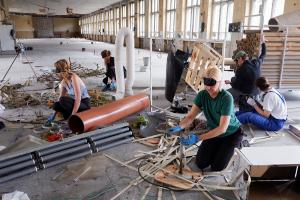
In today’s hyper-digitalized age, where identities, realities, and agencies are continuously stolen and distorted by state-corporate powers, practices like workshopology have the potential to restore people's sovereignty and humanity. Because no matter what knowledge is knowledged, what matters is that we knowledged together.
The transformational potential of workshopology1 has always emerged through communion with others.
Antimuslimischer Rassismus ist eine Realität, die die meisten Muslim:innen jeden Tag, in allen Lebensbereichen erleben müssen — das Internet ist davon nicht ausgeschlossen.
Bevor ich mit euch tiefer in die digitale Welt des Hasses im Netz aus meiner Perspektive, als Aktivistin tauche, denke ich, ist es wichtig, einige grundlegende Begriffe näher zu erläutern.
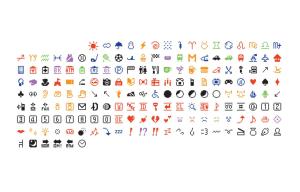
Back in the 1980's, the emergence of the public data networks allowed computers to get connected. People started to exchange messages online and they soon realized that unlike face-to-face conversations, there were no verbal signals (like facial expressions or body language) to give extra context on what was communicated, which sometimes was not clear in the online texts. So what would have been a better idea than to use symbols resembling human faces?
It was 2015 when the Oxford Dictionaries announced the emoji Face with Tears of Joy (😂, U+1F602) as the Word of the Year (WOTY).
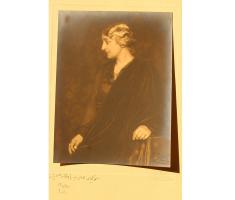
As an outcome of my research, I found that there was a small group of elite Ottoman Muslim women who lived in and traveled to Vienna for temporary stays during WWI. Although their stays were short, these women established social networks both among themselves as Ottoman Muslim women and with local Austrian women.
The following text is based on my latest research inspired by the passport of a Muslim woman who applied for a visa to travel to Vienna from Istanbul in 1917.
Wenn Zugehörigkeit plötzlich brüchig wird, steht auch im Zentrum des Films „Noch lange kein Lipizzaner“. Der Dokumentarfilm setzt an bei der persönlichen Erfahrung der Regisseurin Olga Kosanović: Obwohl sie in Österreich geboren und aufgewachsen ist, wurde ihr Antrag auf die österreichische Staatsbürgerschaft abgelehnt.
„Aber wir sind Emigranten, und für Emigranten sind alle Länder gefährlich, viele Minister halten Reden gegen uns und niemand will uns haben, dabei tun wir gar nichts Böses und sind genau wie alle anderen Menschen.“ 1
Unsere Autorin ist Tochter einer vietdeutschen Familie. Ihre Eltern flüchteten vor den Folgen des Vietnamkrieges, dessen Ende sich 2025 zum 50. Mal jährte. Geboren in Deutschland, erzählt unsere Autorin, wie die Auswirkungen des einst verheerendsten US-amerikanischen Krieges in ihrer Familiengeschichte weiterleben.
Ein Gefühl von Schwere regt sich in meiner Brust, als ich das Datum dieses Jahrestages erblicke: Am 30. April 1975, also vor 50 Jahren, endete der Vietnamkrieg.
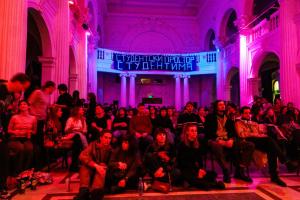
Despite the fact that mainstream media outlets in Serbia remain largely under the control of the ruling right-wing regime accused of corruption, students and citizens have successfully utilized social media as a tool for mobilization, expanding the protests and propelling society toward the articulation and pursuit of a more just, egalitarian and hopeful future.
At the time of writing (October 2025) one of the most significant contemporary gestures of international solidarity with the people of Palestine is unfolding, followed in real time by transnational networks of supporters across progressive social media platforms.
In Österreich dürfen Menschen ohne Staatsbürgerschaft nicht wählen, obwohl sie hier leben und mitwirken. Diese fehlende Partizipation spiegelt sich auch in der Kultur- und Medienlandschaft wieder, in der schmerzhafte und diskriminierende Narrative über Migrant*innen vorherrschen.
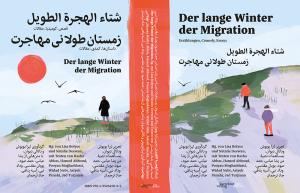
von Asiyeh Panahi, Hamed Abboud, Jad Turjman, Lisa Bolyos, Natalie Deewan, Pooyan Moghaddassi und Widad Nabi
Zehn Jahre ist es her, dass Selbstbestimmung und politischer Kampf, Durchhaltevermögen und kollektive Energie zum »Sommer der Migration« geführt haben, der Europa nachhaltig veränderte. Aus diesem Anlass haben fünf Schriftsteller:innen, die um 2015 aus Syrien, Afghanistan und Iran in den deutschsprachigen Literaturraum gekommen sind, Erzählungen und Essays verfasst.
Zehn Jahre ist es her, dass Selbstbestimmung und politischer Kampf, Durchhaltevermögen und kollektive Energie zum »Sommer der Migration« geführt haben, der Europa nachhaltig veränderte.