

An Unequal Manifestation of Imagined Technological Progress


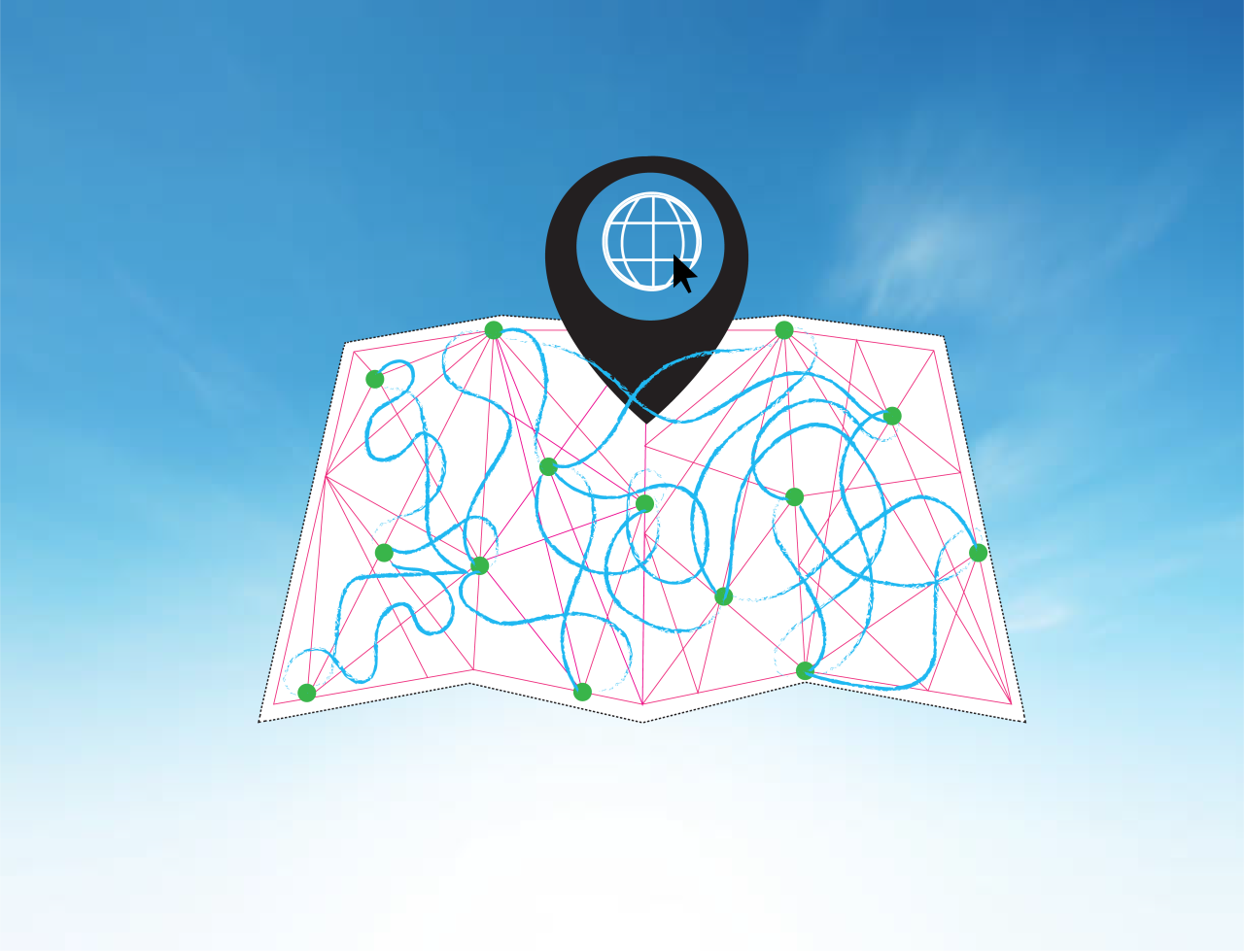
Is a place just a place on a map?
You travel 8,000 kilometres to a strange land. You haven't met the people of this land before, and you do not know their language. They look different, the streets are planned differently, and the buildings are designed differently. They drive on a different side of the road and use a different currency. The colour of the leaves on the trees is a different hue, and the shapes of the fallen leaves resemble a distant picture of the seasons you learned about at school. But then you look up at the sky. It is still blue. The white clouds drift as if you were lying on the grass in your own backyard. The stars in the night sky twinkle as if you were watching them from your own terrace at home. The sun shines the same way, and the warm rays fall on your skin, assuring you that you belong here. On a planet called Earth.
Apart from the sky and sun, another similarity between different places on a map is the technology that runs a city. Moving across the world a few years ago would've been daunting, but not anymore. The same few companies fund the metros, manufacture escalators, provide telecommunications services, support your browsers, and guide you on maps. The logistics that govern life in a city feel eerily similar everywhere. Laptops, card machines, elevators (or the lack thereof), buses, and metros. Insert and eject. Step in and step out. Open and close.
Our world has homogenized itself into a hyper digitalized culture of users everywhere. Apart from providing comfort and convenience, it has set up a manual for us to follow. A formula of sorts. Sure, you can drive on the other side of the road, but a card machine still asks for the same 4-digit password. The streets look picturesquely planned, but the lanes on your phone through which you navigate are the same colour. We operate through the same interfaces wherever we are in the world.
If technology has managed to bring us all closer and make our experiences more similar, as was envisioned by the early pioneers of the internet, government leaders, and visionary scientists, what then makes things different?
The ideals of technological progress were equated to a better quality of life for citizens on Earth. A freer exchange of information on the internet, the ability to connect and collaborate with anyone across the world, and to enhance our everyday experience into a frictionless web of action and possibilities.
Let's take a flat map. Now crumple it up. Throw it away as far as you can. Now, investigate it. Not only are borders deformed, but some are even hidden. The story of the politics of technology is as dark as the shadows that overcast your tiny, crumpled ball of the Earth lying in a corner across the room. It's time to shine some light on it.
It's no coincidence that the internet browser symbol on the screen resembles a globe similar to the messy, crumpled map. But what does an internet that connects various points on this unequal globe actually look like?
Beyond your browser page on your flat screen phone, the internet looks different. It is not invisible. It is made up of matter like everything else. It might help if you follow the cable that connects your modem to the street, to the towers, before it vanishes underground into a sea of cables that connect the world. Literally, a sea of them under the ocean bed. Connecting countries and continents.
The other reality about the physical infrastructures behind our digital world are the questions we need to ask about the hierarchy in these systems.
Why does e-waste end up in landfills of a particular region, and why do workers work nights to keep systems running in a different part of the globe? Why do some have clean water while others don't? Why are some homes dark with power cuts, and some are eternally lit?
To answer these questions, we need to look more closely at the social systems behind technology than the code itself.
Who owns the internet?
As you think, no one person owns the internet. We all own bits of it.
However, the infrastructure that runs the internet —telephone poles, cables, satellites, routers, and data centres —is owned by private and government entities.
The physical parts of the internet strain some parts of the world more than others. Telephone poles contain radiation, engineering undersea cables threatens marine life, satellites lead to space waste, and data centres, which are concentrated in certain areas, extract large amounts of electricity and water to function.
Imagine we made a map of the internet. Not the digital one, but the physical one. If we placed the poles and cables and satellites and data centres all around the world, we would see a huge mesh of metal, silicon, and fibre. A mythical monster that might emerge from the chaos, one that humans never see, but believe exists.
Now, where are the people? Apart from all of us clicking our browser screens and mobile phones, who powers the internet?
Far away from the offices of Silicon Valley or the bustle of Shanghai, workers and communities in remote towns around the world are shaping our relationship with technology. Beyond the air-conditioned walls of desks and offices, people toil through hours keeping the systems up and operating all night. When it comes to digital infrastructures, the current "farmers" tend to servers and not to crops. Data centres have replaced farming land, and crops have been replaced by servers. The physical infrastructure behind our digital clouds that store data for running the internet consist of servers that have to be maintained and kept running 24 hours a day without any breaks. Humans tend to oversee these servers by checking for overheating and for pests that might destroy wiring, to ensure that they continue to function properly. A few errors, and the result could be a server blackout that shuts down platforms that are not not locally bound to where the data centre is, but are spread globally across different locations on the map. Even if what we tend to change, where we derive energy from, doesn't change. Data centres need energy from wind and the sun to power them, water to cool them down, and human beings to monitor them. Not very different from farming.
Like empires of the past, giant corporations rush to own the land on which the data centres are built. The land is extracted from and drained out of its resources like water and energy. Labour is often exploited in more ways than physically — grueling hours in heat and noise psychologically affect the workers. The health of the community and residents whom live in proximity to the data centers are also impacted, even if they don't work within the buildings.
Promises of wages and an uplift of the local economy have turned into noise pollution and water contamination. This is not the information technology of yesterday. Artificial intelligence is much more dependent on humans and energy than one could've ever imagined. And it leaves you with almost nothing. It takes almost everything away.
For one person, it might be the relationship with their family. For one, the health of their child. For another, the health of their agricultural land. The stories that we are hearing of environmental, psychological, and social degradation bear an eerie resemblance to the agricultural revolution spearheaded by giant corporations that hold monopolies on seeds. It is similar to the fast fashion revolution that kill many lives due to unsafe labour conditions. In both, it was the power of communities who resisted and turned to organic and slow consumption.
These communities can be as local as those affected themselves or as global as all the consumers of the technology. Not only can local communities exercise their democratic rights to basic resources, but they can also band together across geographical borders to exchange information. We have seen examples: a local community in Minneapolis was successful in their protest, resulting in a corporate executive withdrawing their proposal to build a data centre; this is a physical win. On the other hand, the Maori community have created a data sovereignty manual to protect and take ownership of their language data. I see this as a win for our intangible resources: like culture. The fact that technology is distributed over physical and digital frontiers gives us two playing grounds: the ability to converge on land and overseas.
Coming back to the basic tenets, though, what are we aspiring towards in the end? Our access to a quality life, the warm sun to produce our food, water to sustain us, and overall freedom — to live our best life harmoniously with other lives on this planet. Our immersion into the digital often makes us forget that it is this blue planet that provides, and our lives are as connected to the soil and sun, as much as we are connected to each other through wired or wireless cables. A fight for a more equal digital world is built on the foundations of equal access to physical resources on the ground. For the same sun shines through the windows of those in any latitude, irrespective of how resource-rich or poor they are, traveling through time to illuminate each and every part of this planet.